
In brief
A milk system in a coffee machine plays a major role in determining how well the office coffee service works. Powdered milk is inexpensive and requires little effort, but it has a bland taste. Fresh milk produces creamy foam and a rich flavor, while Lattiz strikes a balance with a taste close to fresh milk and easier hygiene. In an office with 40 to 50 employees, Lattiz often ends up being cheaper than fresh milk after six to nine months. Properly cleaning the milk system prevents milk residue, bacteria, and a bad aftertaste.
– Powder: refill once a week; low risk of spoilage – Fresh milk: replace daily; better foam – Lattiz: long-life cartons; a weekly rinse is usually sufficient – An accounting firm with 45 employees saw complaints about weak foam decrease and cappuccino consumption increase by 30 percent
Why do offices often choose powdered milk systems?
Powder remains popular among offices that want to keep their fixed costs low. The system mixes powdered milk with water using a dosing mechanism. You fill the container once a week and set the strength using the control panel.
The main advantage is convenience. Cleaning takes very little time, and there’s virtually no risk of spoilage. However, the flavor is blander and the foam is less creamy than with real milk. For teams that mainly drink black coffee or simple milk-based drinks, this may be sufficient.

Why does fresh milk produce better-tasting coffee?
Fresh milk requires more attention but also yields more. The system uses a cooling unit and a milk hose that immediately draws in the milk and froths it. You must replace the milk every day to prevent spoilage.
This results in a richer flavor and a thick, creamy foam that significantly improves cappuccinos and lattes. At the same time, cleaning time increases, and the risk of malfunctions rises if the cooling system fails temporarily. For offices where flavor is a priority, this often outweighs the extra effort.
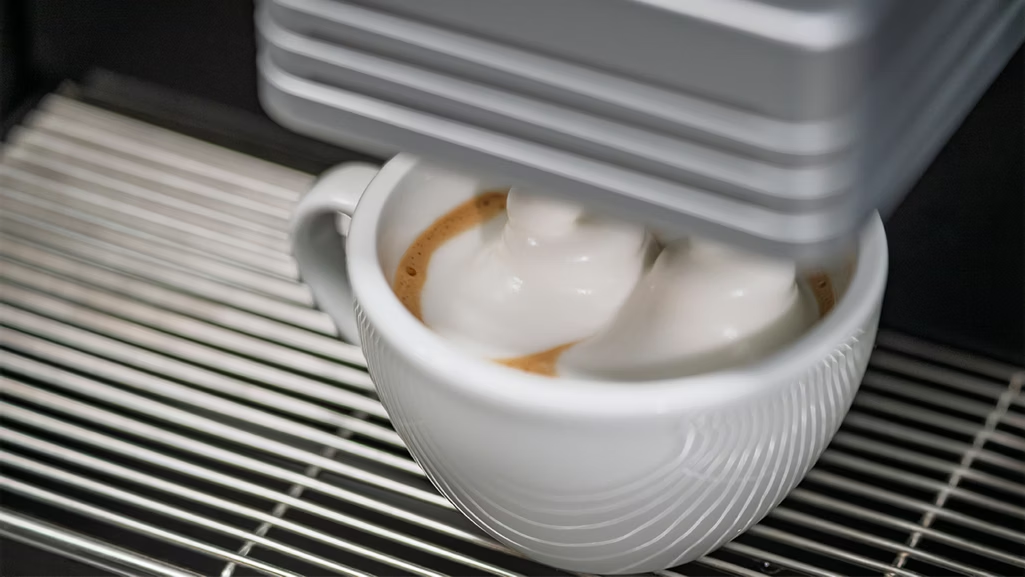
How does Lattiz serve as a practical middle ground between powdered milk and fresh milk?
Lattiz (a system for long-life milk cartons) combines the best of both worlds. You place a long-life milk carton in a compact holder and connect the hose. The system automatically dispenses the milk and keeps it fresh longer.
The taste is very similar to that of fresh milk, while hygiene is easier to maintain. A weekly rinse is usually sufficient. After a trial period, many customers choose Lattiz because the number of complaints about thin foam drops immediately. You can find more information about this system on our page about the Lattiz milk system.
How much do powdered milk, fresh milk, and Lattiz cost, roughly?
Powder is the most cost-effective option. The cost per serving remains low, and consumption is easy to control. Fresh milk is more expensive due to daily waste, refrigeration, and more intensive maintenance. Lattiz falls somewhere in between: it’s slightly more expensive than powder, but has lower operating costs than fresh milk because the cartons last longer and less milk is wasted.
In an office with 40 to 50 employees, you'll often find that Lattiz ends up being cheaper than fresh milk after six to nine months, while it tastes noticeably better than powdered milk.
| Aspect | Powder | Fresh milk | Lattiz |
|---|---|---|---|
| Taste | flatter, less creamy foam | richer flavor, thick, creamy foam | close to fresh milk |
| Maintenance | Doesn't take much time; just once a week | Replace daily, clean more often | A weekly rinse is usually enough |
| Hygiene | virtually no risk of spoilage | Risk in the Event of a Cooling System Failure | simpler, with a longer shelf life |
| Costs | lowest price and fuel consumption | higher due to waste and maintenance | On average, after 6–9 months, it is often cheaper than fresh milk for a company with 40–50 employees |
Which coffee machines are compatible with the different milk systems?
Not every milk system is compatible with every machine. Powder systems work with most fully automatic machines. Fresh milk and Lattiz require machines with a suitable milk inlet and often a separate cooling unit or container.
Our office coffee machines are typically compatible with Lattiz or a traditional milk system. When making a selection, we always consider the brand and the number of cups per day. Machines with a compatible milk inlet generally work well with Lattiz, provided the software is configured correctly.
What is the difference between a milking lance and a built-in milking system?
Some people confuse the milk wand (milk lance: a steam wand for manually frothing milk) with a full milk system. A milk lance froths milk using steam and is primarily intended for manual preparation. A built-in milk system automatically pumps, dispenses, and froths milk.
Lattiz and most fresh-milk systems fall into the second category. This difference is important when it comes to coffee machine maintenance, because a complete system has more pipes and valves that need to be cleaned.
How do you go about your daily cleaning routine?
Rinse the milk tube and the lines with warm water every day. For fresh milk, remove the hose from the pitcher and run the system through a rinse cycle. For Lattiz, remove the carton and rinse the pump. This prevents milk residue from drying out and ensures there is no unpleasant aftertaste the next day.
When should you perform a deep clean?
Once a week, perform a thorough cleaning using an approved milk cleaner. If using powdered milk, remove the container and clean the dosing screw. If using Lattiz or fresh milk, run the cleaning solution through the lines according to the machine’s instructions. It’s best to remove milk residue at set times, before it hardens.

How often should you clean each system?
– Powder: rinse daily, deep clean weekly – Fresh milk: replace and rinse daily, run a short cleaning cycle every two days – Lattiz: rinse daily, deep clean weekly
An accounting firm with 45 employees switched from powdered coffee to Lattiz. The number of complaints about weak foam dropped immediately, and the daily cleaning routine was reduced from ten to four minutes. Cappuccino consumption increased by 30 percent.
Ultimately, the best choice depends on what’s important to you: low costs, maximum flavor, or minimal maintenance. Would you like personalized advice tailored to your situation? Then please contact us. For years, we’ve been helping organizations choose the right milk systems for commercial coffee machines that really work in practice.
Frequently Asked Questions About the Milk System in an Office Coffee Machine
What is the biggest difference between powdered milk and fresh milk?
Powder is inexpensive and requires little maintenance, but it has a blander taste. Fresh milk has a richer flavor and produces a creamier foam, but it must be replaced daily and requires more cleaning.
Lattiz delivers a taste close to that of fresh milk with far fewer daily tasks. Customers often see an immediate reduction in complaints about thin foam and lower operating costs after six to nine months.
How often should you clean a milking system?
Powder requires daily rinsing and weekly deep cleaning. Fresh milk requires daily rinsing plus a short cycle every two days. Lattiz requires daily rinsing and weekly thorough cleaning.
What effect does milk residue have on a coffee machine?
Milk residue provides a breeding ground for bacteria, causes unpleasant flavors, and can clog pipes. Regular cleaning prevents this and extends the lifespan of the system.
What exactly is a milk lance?
A milk lance is a small steam wand used for manual frothing. It is not a fully automatic milk system like Lattiz or fresh milk systems that pump and dispense milk.

Want to make the best coffee at work?
Discover our commercial coffee machines with an all-inclusive subscription, or schedule a no-obligation trial appointment at our showroom.