
In brief
Regular maintenance prevents 80% of coffee machine malfunctions. Emptying the drip tray daily, cleaning the brew group weekly, and descaling monthly will keep your machine running reliably for years. A professional six-monthly check-up detects wear and tear before it leads to breakdowns.
What is preventive maintenance for coffee machines?
Preventive maintenance includes all planned cleaning and inspection tasks that you perform before a malfunction occurs. The goal is to prevent the accumulation of coffee grounds, limescale, and milk residue. This keeps the water temperature stable, the flow optimal, and the taste consistent. Preventive maintenance differs from corrective maintenance, where you only intervene after a defect has occurred.
Why is preventive care necessary?
A well-functioning coffee machine is the backbone of every office break. Yet coffee machine maintenance is often postponed until something actually goes wrong. That's a shame, because preventive maintenance not only prevents annoying malfunctions, but also preserves the full flavor of your coffee.

How can you prevent a coffee machine malfunction?
Most malfunctions are caused by three things: coffee residue buildup, limescale, or a dirty milk system. By cleaning regularly, you can remove these culprits before they cause problems.
Limescale deposits affect internal pipes and influence the water temperature. Old coffee residues make the taste bitter or stale. Preventing coffee machine malfunctions therefore starts with consistent maintenance according to a fixed service schedule. Want to know more about our service?

Step-by-step plan: maintenance schedule for your coffee machine
A clear schedule helps to ensure that no care tasks are overlooked. Divide your tasks into daily, weekly, and monthly tasks.
- Daily: empty drip tray and coffee grounds container
Empty both after each working day and rinse them with warm water. Wipe the outside and drip plate clean. Time investment: approximately 5 minutes. - Daily: change the water reservoir
Replace the water daily with fresh, cold tap water. Stagnant water promotes bacterial growth. - Weekly: cleaning the brew group
Remove the brew group (if possible) and rinse it under the tap. Allow it to dry completely before putting it back in place. - Weekly: Flush the milk system
Regularly rinse the milk system with water after use. Use a milk system cleaner weekly to dissolve protein residues. - Monthly: descale
Use a descaler suitable for your machine. Follow the manufacturer's instructions. The frequency depends on the water hardness in your region. - Monthly: Replace the water filter
A clean water filter ensures pure water and protects internal components from limescale. - Every six months: professional inspection
Have a technician check the internal components, adjust the grind and temperature, and identify any wear and tear.

Cleaning the milk system: extra attention required
Machines with a milk frother require extra care. Milk residues form a breeding ground for bacteria and clog the pipes. Rinse the milk system with water regularly after use. Use a special milk system cleaner that dissolves protein residues on a weekly basis. This will keep your cappuccino creamy and hygienic.

What happens if maintenance is poor?
Those who neglect maintenance will first notice this in the taste. Coffee becomes bitter or bland due to old residues and limescale deposits. Technical malfunctions may then occur: the machine may falter, make strange noises, or refuse to work altogether.
In the long term, poor maintenance significantly shortens the lifespan of your coffee machine. Investing in regular maintenance will therefore save you a lot of headaches and repair costs in the long run.
Professional periodic inspection
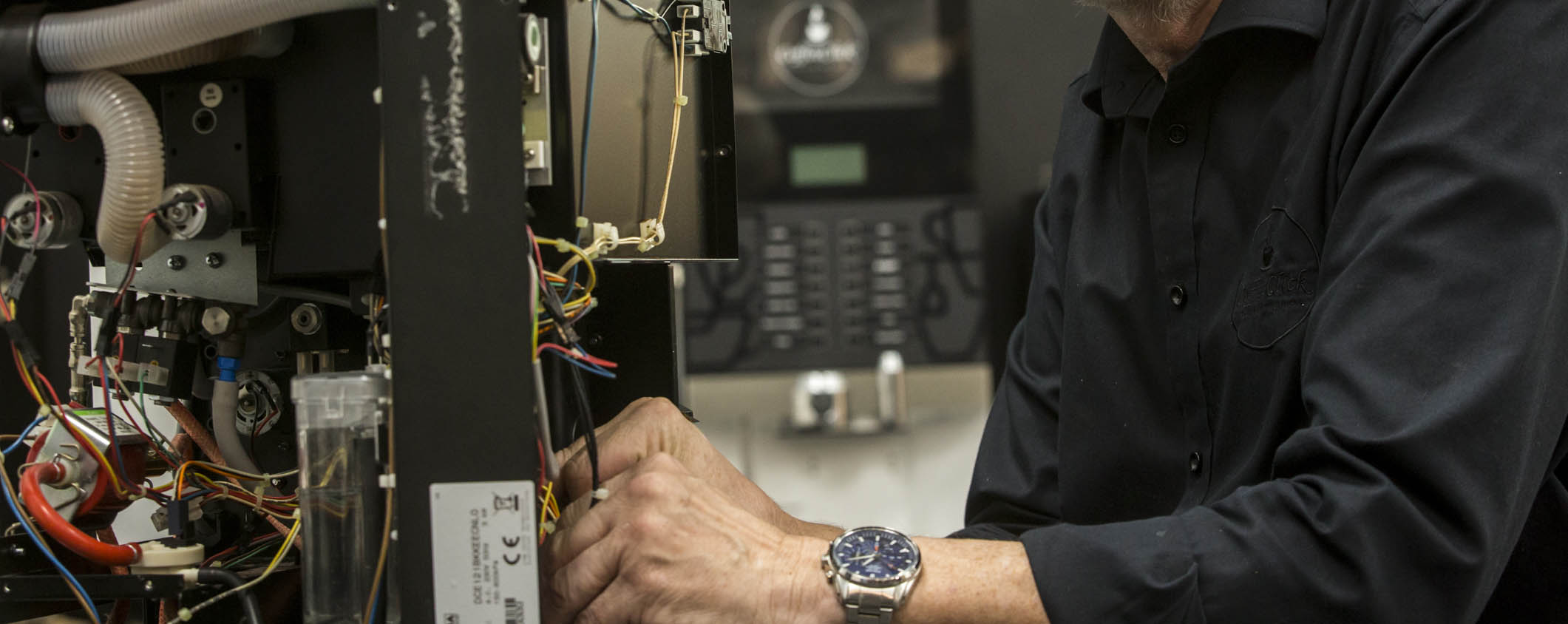
In addition to your own maintenance efforts, a six-monthly check by a technician is recommended. A professional will check internal components that you cannot reach yourself, accurately adjust the grinding degree and temperature, and identify wear and tear before it leads to failure.
At CoffeeClick, our service technicians take care of these checks so that you can enjoy your coffee without any worries.
Choosing the right maintenance products
Not all cleaning agents are the same. Preferably use products recommended by the manufacturer or those specifically suitable for your machine type.
- Citric acid-based descalers are mild but effective against limescale.
- Cleaning tablets dissolve stubborn coffee grease in the brewing unit.
- Milk system cleaners remove protein residues and prevent blockages.
Check out our range of maintenance products to find the right products for your machine.
Frequently asked questions about coffee machine maintenance
How often should I descale my coffee machine?
Monthly for average water hardness. For hard water (above 15 °dH), biweekly is recommended.
Can I use vinegar as a descaler?
No, vinegar can damage rubber seals. Use a citric acid-based descaler.
Why does my coffee taste bitter after cleaning?
There are probably cleaning agent residues left behind. Rinse the machine thoroughly with clean water.
How do I know if my set group is removable?
Consult the manual for your machine. In most fully automatic machines from brands such as ETNA and Franke, the brewing unit is removable.
How long does a water filter last?
On average, one month or after approximately 50 liters of water consumption, depending on the filter type.
Can I put the brewing unit in the dishwasher?
No, the dishwasher damages the lubrication of the brewing unit. Rinse manually with lukewarm water.
What should I do if my machine displays an error message after descaling?
Reset the descaling indicator according to the manual. Does the message remain? Contact a technician.
How can I prevent mold in the water tank?
Change the water daily and allow the reservoir to dry weekly before refilling it.
Is a service contract worth it?
For offices with intensive use, yes. You avoid unexpected costs and keep the machine in optimal condition.