
In brief
Cashless payments will be the norm on Dutch campuses by 2026, changing how students buy coffee, what data becomes available, and how service contracts are structured. By 2024, cashless transactions already accounted for 71% of all vending machine payments, and contactless methods such as NFC and QR codes continue to grow.
- Cashless transactions generate an average of 25% more revenue per purchase than cash payments.
- NFC, combined with campus card integration, covers the majority of users.
- Telemetry data from cashless vending machines makes it possible to create restocking schedules based on actual consumption.
- Mobile payments via cell phone or smartwatch grew by more than 300% in 2024.
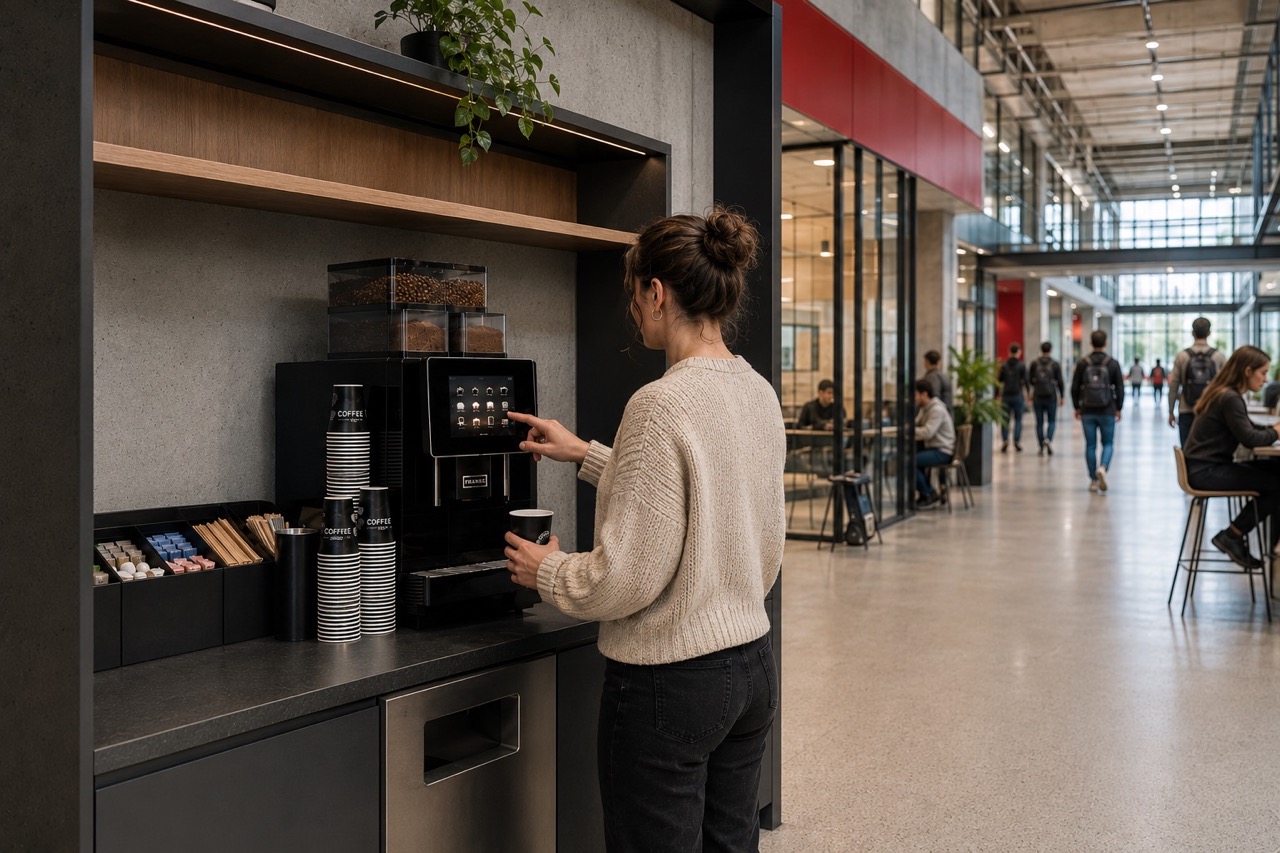
Coffee machines at vocational schools, colleges, and universities are increasingly operating without cash. Coffee in educational institutions and cashless self-service will be the standard on campuses throughout the Netherlands by 2026. This shift is changing not only how students pay, but also how much they spend, what data becomes available, and how service contracts are structured. This article explains what this development means in concrete terms for revenue, behavior, and operational planning.
Why Cashless Payments Are Growing So Rapidly on Campuses
Eindhoven University of Technology switched to debit card-only payments in its cafeterias and vending machines. Radboud University replaced all its coffee machines with models equipped with card readers that accept only employee ID cards and debit cards. Vocational and higher vocational education institutions are rapidly following suit.
The reason is simple: students in 2026 rarely carry cash. They pay with their phone, smartwatch, or campus card. A vending machine that only accepts coins misses out on a large portion of potential sales. According to the Cantaloupe Micropayment Trends Report 2025, 71% of all vending machine transactions in 2024 were cashless. Of those cashless payments, 77% were contactless: a tap with a phone, watch, or card. Any institution—whether a college or university—that takes the coffee market seriously in 2026 cannot afford to accept only coins.
Payment Technology on Campus: NFC, QR Codes, and Campus Cards
NFC (Near Field Communication)
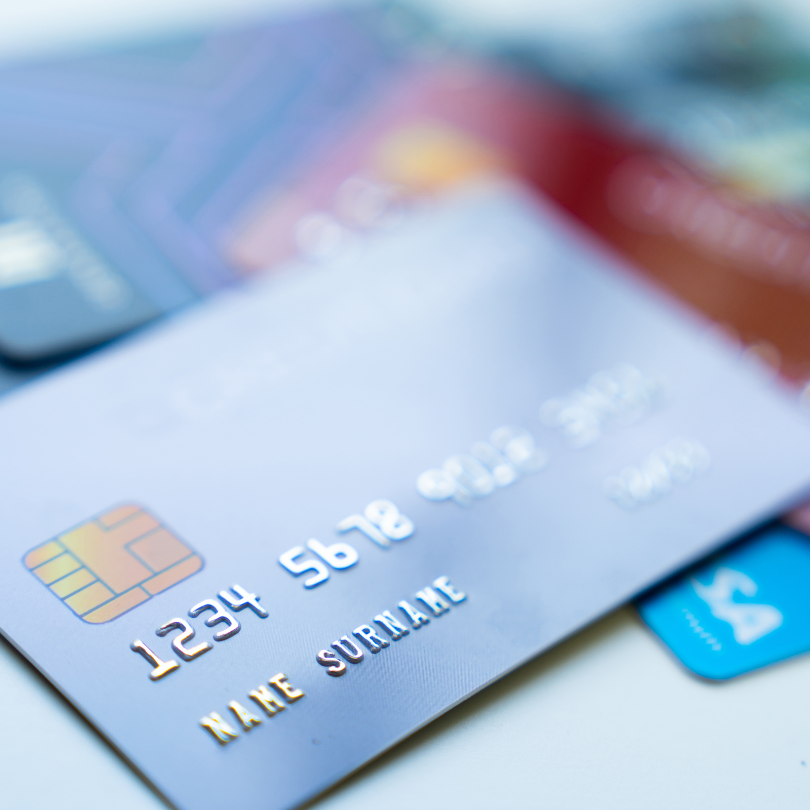
is the most commonly used method. NFC is a short-range wireless communication technology that allows devices to exchange data by holding them close to each other. Students tap their bank card, phone, or smartwatch against the reader. Apple Pay, Google Pay, and Samsung Pay all use NFC. NFC is the preferred option for campus card integration because the same reader can process both bank cards and student ID cards.
QR Payment
is gaining ground as an alternative. The machine displays a code on the screen; the student scans it with a payment app and confirms the transaction. QR code payments at school coffee machines are especially convenient when an institution does not want to install NFC hardware or offers its own payment system.
Campus Card Integration
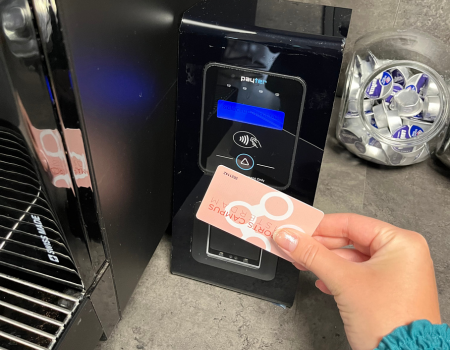
links the student ID card to a digital balance or bank account. Universities such as Utrecht and Radboud use this system: students load funds onto their card via a web app or service desk and use it to pay at any vending machine on campus. This allows the institution to maintain full control over pricing and transaction data. A rule of thumb: always combine NFC with a campus card, so that both personal payment methods and the institutional ID card work.
How Cashless Payments Affect Revenue and Behavior on Campus
The shift to cashless payments has a direct, measurable impact on spending. The Cantaloupe Micropayment Trends Report 2025 shows that the average cashless transaction at vending machines is about 25% higher than a cash payment. Mobile payments via cell phone or smartwatch grew by more than 300% in 2024 compared to the previous year.
On a campus with dozens of vending machines and thousands of daily users, that difference quickly adds up. Students who pay with contactless payment are more likely to choose a more expensive coffee option or add an extra item.
In addition, cashless payments provide valuable data. You can see which products are selling the most by machine, by hour, and by location. This information helps you adjust your product assortment and plan restocking times. A practical threshold: once more than 70% of transactions are cashless, telemetry (the remote collection and transmission of measurement data) provides enough data to base restocking schedules entirely on consumption rather than on fixed intervals.
Peak Periods, Service, and Contract Impact
A coffee machine at a university has a very different usage pattern than one in an office. During exam weeks and deadline periods, usage rises sharply. Students work later into the night, visit the library in the evenings, and get coffee more often. During weeks without classes and summer breaks, usage drops to a fraction of the normal level.
Modern telemetry systems in cashless vending machines continuously monitor inventory levels. Instead of following a fixed service schedule, the service technician uses actual data to determine which machines require attention. This prevents vending machines from running out of stock during peak weeks and eliminates unnecessary trips during slow periods.
For facilities managers, this translates directly into service contracts: data-driven maintenance replaces fixed visit frequencies, which increases availability and eliminates unnecessary service costs. By combining transaction data with the academic calendar, facilities managers can tailor service deployment to actual weekly demand.
Cashless, self-service coffee on college campuses is therefore more than just a payment trend. It is an operational management tool that makes coffee service on campuses measurable and predictable.
Frequently Asked Questions
How fast is cashless payment growing on college campuses?
According to the Cantaloupe Micropayment Trends Report 2025, 71% of all vending machine transactions in 2024 were cashless. Mobile payments grew by more than 300% in a single year. On Dutch campuses, more and more institutions are switching entirely to debit card and contactless payments, as TU Eindhoven and Radboud have already done.
Which payment technology works best in schools?
A combination of NFC card readers and campus card integration covers the needs of most users. NFC accepts debit cards, phones, and smartwatches. The campus card offers additional control over prices and balances. QR payments are a good addition, especially for institutions with their own app.
How do you integrate payment with the campus card?
The campus card will be equipped with an NFC chip linked to a digital balance or bank account. Students can add funds to their balance via a web app or at a service desk. The vending machine reads the card and deducts the amount. Universities such as Utrecht and Radboud are already using this system for coffee, snacks, and printing.
What are the differences in service pressure between exam periods and class periods?
During exam weeks, coffee consumption on campuses can rise sharply because students are on campus longer. During weeks without classes and during vacations, consumption drops significantly. Telemetry systems in modern vending machines continuously monitor inventory levels, allowing service visits to be scheduled based on actual data.
Does cashless payment generate measurably higher revenue per ATM?
Yes. Cashless transactions are, on average, 25% higher than cash payments. On a busy campus with thousands of users per day, that difference adds up quickly at each vending machine. In addition, students who pay with contactless payment methods are more likely to choose a more elaborate coffee option or an additional item.

Want to make the best coffee at work?
Discover our commercial coffee machines with an all-inclusive subscription, or schedule a no-obligation trial appointment at our showroom.