
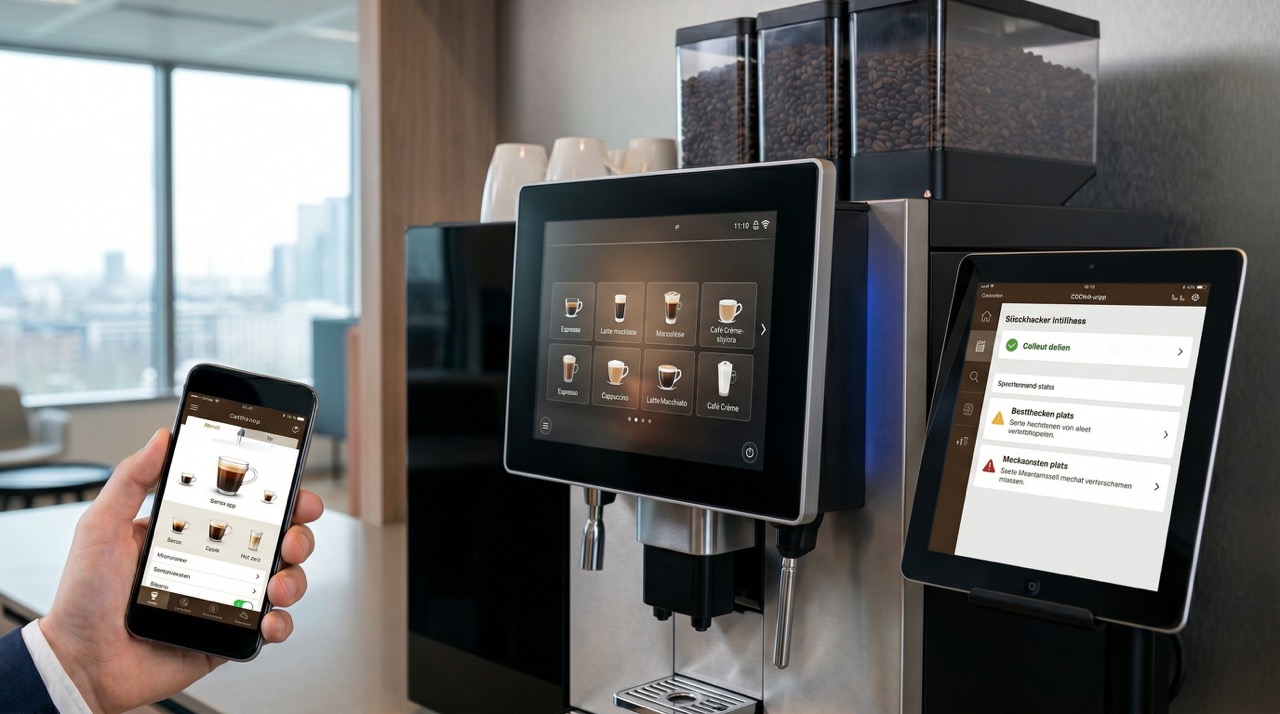
In brief
Telemetry in commercial coffee machines helps identify existing maintenance issues before they escalate, but it does not replace every service visit. The operational benefits lie in proactive maintenance, improved capacity planning, and energy savings.
- Connected machines record head counts, pump pressure, extraction temperature, error codes, and cleaning cycles.
- Proactive maintenance based on dashboard data reduces unplanned downtime.
- For an office with approximately 200 employees, service providers estimate the savings at 15 to 25 facility hours per month.
- Raw machine data that is not linked to individuals is not subject to the GDPR; however, user profiles are subject to GDPR requirements.
Facility managers are increasingly hearing that a connected coffee machine offers telemetry that predicts maintenance needs, optimizes consumption, and prevents breakdowns. These are appealing promises, but what does machine data actually solve in practice? This article breaks down what data an IoT coffee machine collects in the office, where the operational benefits lie, and where the marketing claims end. CoffeeClick, a specialist in corporate coffee solutions with daily experience in setting up office coffee facilities, knows which data makes a difference in the workplace—and which does not.
What data does a connected coffee machine collect?
Commercial coffee machines equipped with a telemetry module (a built-in or external sensor that reads and transmits operational data) continuously record operational parameters. These include the number of cups brewed per day, the breakdown by coffee type, water temperature, pump pressure, and cycle time per extraction. In addition, they log error codes, cleaning cycles (or the absence thereof), and energy consumption in standby mode and during peak hours.
Those data points are transmitted via a secure connection to a cloud platform. There, they appear in a dashboard where the facility manager or supplier can identify trends. If consumption suddenly drops on Monday night, that indicates a faulty timer. If the average extraction time is gradually increasing, descaling is likely needed.
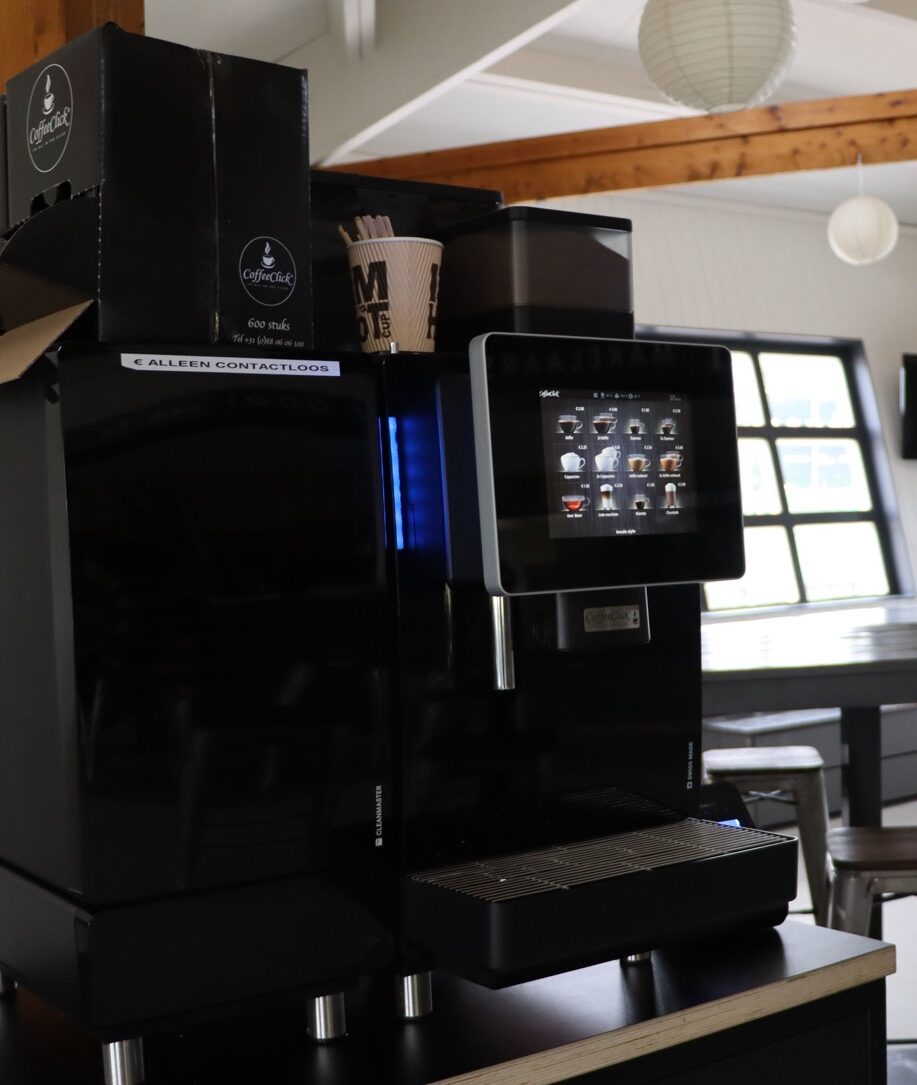
From reactive to proactive maintenance
The biggest operational shift is the move from reactive to proactive maintenance. Without telemetry, an employee only calls once the machine has already stopped. With live data, a service team can intervene before a malfunction occurs. Schedule a maintenance check as soon as the dashboard shows an abnormal error code or dropping pump pressure, rather than waiting for a complaint. A useful rule of thumb: always prioritize error codes that directly affect extraction quality (pressure, temperature) over notifications about refilling or cleaning. This helps prevent unplanned downtime during peak periods.
Usage data also helps with capacity planning. If the machine consistently processes more cups than expected, this is a sign that you should restock the beans sooner or consider adding a second machine. Energy monitoring makes it possible to reduce standby time by putting the machine into an energy-saving mode outside of business hours, based on peak times shown on the dashboard.
For facility teams managing multiple locations, a centralized IoT dashboard provides an overview that previously required manual rounds. At an office with around 200 employees and two fully automatic machines, service providers estimate the savings at 15 to 25 facility hours per month, as unplanned visits decrease and response times are reduced. A single screen displays the status of each machine, including stock levels and cleaning history.

Practical example: scheduling maintenance based on dates
An office with two fully automatic machines uses an average of 350 cups per day. The telemetry module indicates that the brewing unit of machine A is showing an increasing error rate. Without that data, the machine would only be flagged after a complete shutdown, resulting in half a day of downtime. Now, the facility manager schedules the service visit in the evening based on the dashboard alert. No disruption to the workplace and a longer service life for the machine.
The Limits of Telemetry: Data Quality and Promises
Telemetry is not a magic bullet. The quality of the data depends on the sensors in the machine and the frequency at which data is transmitted. Basic modules often measure only head counts and generic error codes, while advanced modules also record pump pressure trends, extraction temperature, and cleaning intensity. That difference in sensor accuracy directly determines how useful your dashboard is. When purchasing, check which data points the module actually records and at what interval.
Not every error code provides useful insight. Some alerts are generic and still require a physical inspection. The claim that connected coffee machine telemetry “eliminates the need for all service visits” is an exaggeration. What it does do is reduce the number of urgent, unscheduled visits and improve the timing of scheduled visits.

GDPR and privacy: what should you look out for?
As soon as an IoT coffee machine in the office records usage patterns that can be traced back to individual employees, this falls under the General Data Protection Regulation (GDPR). Examples include machines with a personal profile, a badge link, or an app that saves preferences for each user. In such cases, you are processing personal data, and the standard GDPR obligations apply: a record of processing activities, a clear legal basis, and transparency toward employees.
If you use telemetry solely at the machine level without linking it to individuals, the GDPR risk is limited. However, make sure that the cloud provider stores data within the EU and that you have entered into a data processing agreement. Document this before you activate the module, not afterward.
Telemetry in commercial coffee machines doesn’t solve problems you didn’t already have. It makes existing problems visible before they escalate. Those who use connected coffee machine telemetry as a management tool rather than a sales pitch get the most out of it.
Frequently Asked Questions About Connected Coffee Makers
What data does a connected coffee machine collect?
A connected machine typically records the number of cups, coffee variety distribution, water temperature, pump pressure, error codes, cleaning cycles, and energy consumption. The exact parameters vary by manufacturer and telemetry module.
What are the concrete operational benefits of telemetry?
The biggest advantage is the shift from reactive to proactive maintenance. Issues are identified earlier, service visits are better planned, and consumption data helps with capacity and procurement planning.
Is data from a coffee machine subject to the GDPR?
That depends on the setup. Pure machine data that isn’t linked to individuals falls outside the scope of the GDPR. As soon as user profiles, badges, or apps track individual behavior, you are processing personal data, and the GDPR obligations apply.
What is the difference between a basic and an advanced telemetry module?
A basic module measures head counts and generic error codes. An advanced module also records pump pressure trends, extraction temperature, and cleaning intensity. The more data points you have, the more accurately you can plan your maintenance.
Does telemetry also work on older machines when retrofitted?
Yes, there are external telemetry modules that can be connected to existing machines. The amount of data that such a retrofit module can read is more limited than with machines that have built-in sensors. Check in advance which data points the module supports.

Want to make the best coffee at work?
Discover our commercial coffee machines with an all-inclusive subscription, or schedule a no-obligation trial appointment at our showroom.